
Ethiopian Coffee Origins and Processing-Where the Legend Began

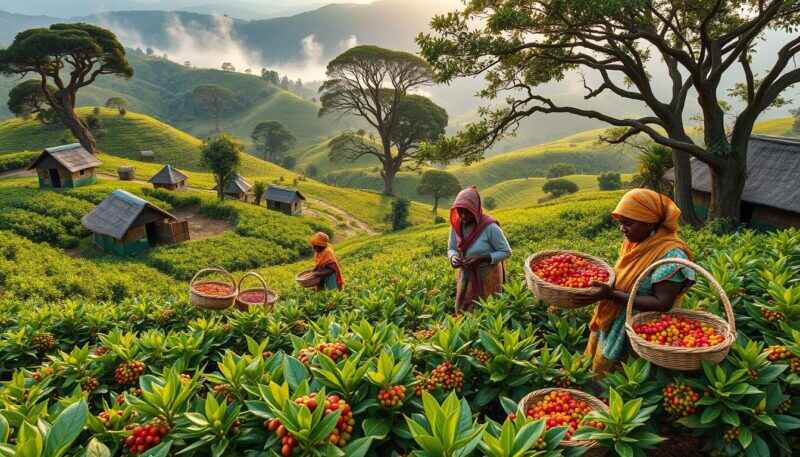
Welcome to Ethiopia – The Cradle of Coffee
When we talk about the origins of coffee, there’s one country that stands tall above the rest: Ethiopia. Known as the birthplace of Arabica coffee, Ethiopia is more than a producer—it’s the soul of coffee culture. At Kiva Han Coffee, we proudly source beans from Ethiopian farmers whose passion and traditions go back centuries. In this post, we’ll take you on a journey through Ethiopia’s rich coffee legacy, unique growing regions, and processing methods that create some of the most vibrant and complex coffees in the world.
The Legendary Beginning
The story begins with a goatherd named Kaldi, who discovered that his goats became unusually energetic after eating red cherries from a wild bush. This legend, dating back to the 9th century, symbolizes the world’s first known interaction with coffee—and it happened right in the Ethiopian highlands.
Whether myth or truth, the global coffee culture we know today owes its roots to Ethiopia.
Coffee Grown in the Wild
What makes Ethiopian coffee unique is that it still grows wild in many regions, unlike the cultivated farms found in other parts of the world. These wild coffee forests are rich in biodiversity, producing beans with unmatched flavor variety.
The beans are predominantly Arabica, and Ethiopia has thousands of unique, naturally occurring heirloom varietals, many of which have not been catalogued. This diversity contributes to the country’s incredibly complex flavor profiles—from floral and citrusy to winey and berry-like.
Famous Coffee Growing Regions of Ethiopia
Ethiopia’s coffee regions are defined by their altitude, microclimates, and terroir. Each region produces a cup that’s unmistakably different.
Yirgacheffe
- Altitude: 1,800–2,200 meters
- Flavor: Floral, tea-like, lemon zest
- Processing: Mostly washed
Yirgacheffe coffees are celebrated for their clean acidity and delicate floral notes. They’re often considered the finest representation of washed Ethiopian coffees.
Sidamo
- Altitude: 1,500–2,200 meters
- Flavor: Sweet citrus, light body, balanced acidity
- Processing: Washed and natural
Sidamo coffees are versatile and aromatic, known for their bright flavor and mild sweetness.
Harrar
- Altitude: 1,400–2,000 meters
- Flavor: Winey, blueberry, dark chocolate
- Processing: Natural (sun-dried with cherry skin)
Harrar beans are famous for their wild fruit and wine-like complexity. These beans are bold, syrupy, and unforgettable.
Traditional Processing Methods in Ethiopia
Ethiopian producers use both washed (wet) and natural (dry) processing, often done by hand at the farm level. Each method brings out different aspects of the coffee.
Washed Process
- Cherries are pulped and fermented in water, then washed and dried on raised beds.
- Produces a clean cup with bright acidity and floral/citrus notes.
- Common in Yirgacheffe and Sidamo.
Natural Process
- Whole cherries are sun-dried on raised beds, allowing sugars to infuse the bean.
- Produces a full-bodied, fruity, and winey cup.
- Common in Harrar and southern regions.
These processing methods reflect generational knowledge passed down through families and communities.
Coffee Farming and Community
Most coffee in Ethiopia is grown by smallholder farmers, many of whom operate less than 2 hectares of land. These farmers are not just growers—they are guardians of tradition. They handpick ripe cherries, process them on their farms, and often deliver them to local washing stations or cooperatives.
The social impact of coffee in Ethiopia is immense. It’s a source of income, culture, and national pride. When you enjoy a cup of Ethiopian coffee, you’re directly supporting families, communities, and a legacy that spans generations.
The Ethiopian Coffee Ceremony
Coffee in Ethiopia isn’t just a beverage—it’s an experience. The Ethiopian coffee ceremony is a revered tradition and a symbol of hospitality. It involves:
- Roasting green beans over an open flame
- Grinding beans by hand with a mortar and pestle
- Brewing in a traditional clay pot called a jebena
- Serving 3 rounds of coffee (abol, tona, and baraka)
Participating in a coffee ceremony connects people through storytelling, reflection, and respect. At Kiva Han Coffee, we are deeply inspired by this ritual and its reverence for every step of the process.
Why Ethiopian Coffee Stands Out
Ethiopia offers unparalleled flavor diversity in the coffee world. Here’s why coffee lovers, baristas, and roasters adore it:
- Naturally occurring heirloom varietals
- Unique altitudes and climates
- Distinctive processing methods
- Small-scale, ethical farming
- Rich cultural and historical roots
Whether you prefer a floral, tea-like brew or a bold, fruity explosion, Ethiopian beans offer something special for every palate.
Kiva Han Coffee & Ethiopian Beans
At Kiva Han Coffee, we work directly with trusted sourcing partners and cooperatives to bring you traceable Ethiopian coffees. We roast each batch by hand in Dhaka, Bangladesh, capturing the floral elegance and crisp brightness that Ethiopian beans are known for.
Our current offerings may include single-origin lots from Yirgacheffe or Sidamo, ideal for pour-over, Chemex, and filter brewing. Ask our baristas about the latest Ethiopian arrivals—we love sharing the stories behind each cup.
Ready to Taste the Origin?
If you haven’t tried Ethiopian coffee before, now’s the perfect time to experience the flavor that started it all. Whether you’re a coffee enthusiast, a café owner, or just curious, our Ethiopian selections will give you a taste of history in every sip.
👉 Visit our café or shop online at kivahancoffee.com to explore our latest Ethiopian roasts.
Blog Keywords:
#EthiopianCoffee, #CoffeeOriginEthiopia, #EthiopianCoffeeProcessing, #EthiopianNaturalCoffee, #EthiopianCoffeeCeremony, #ArabicaCoffeeBeansEthiopia, #BestEthiopianCoffee